


Learn Excel Programming with VBA Course in Singapore
VBA Excel Training: Learn to automate reports and workflows using Macros, PivotTables, Charts, and advanced formulas.
UTAP
NTUC membersCourse Start Date
Schedule
- Days: 3 Days
- Duration: 21 Hours
- Timings: 9:30 AM - 5:30 PM
- 10 Anson Road, 26-08A International Plaza, Singapore 079903
Why Choose Us
- Expert Local Trainers
- Hands-on Training by experts
- Certificate of Achievement
Who Should Attend This Excel Programming with VBA Course Singapore
The Excel Programming with VBA Course in Singapore is ideal for professionals who are already proficient with advanced Excel features and are looking to take their skills further through automation.

Business professionals

Analyst

Entrepreneur

Training Professionals

Student
Course Completion Requirements
Minimum 75% attendance is required in order to complete the course and receive the course completion certificate

Above 16 years old

High School Level English

Basic internet & computer operation skills


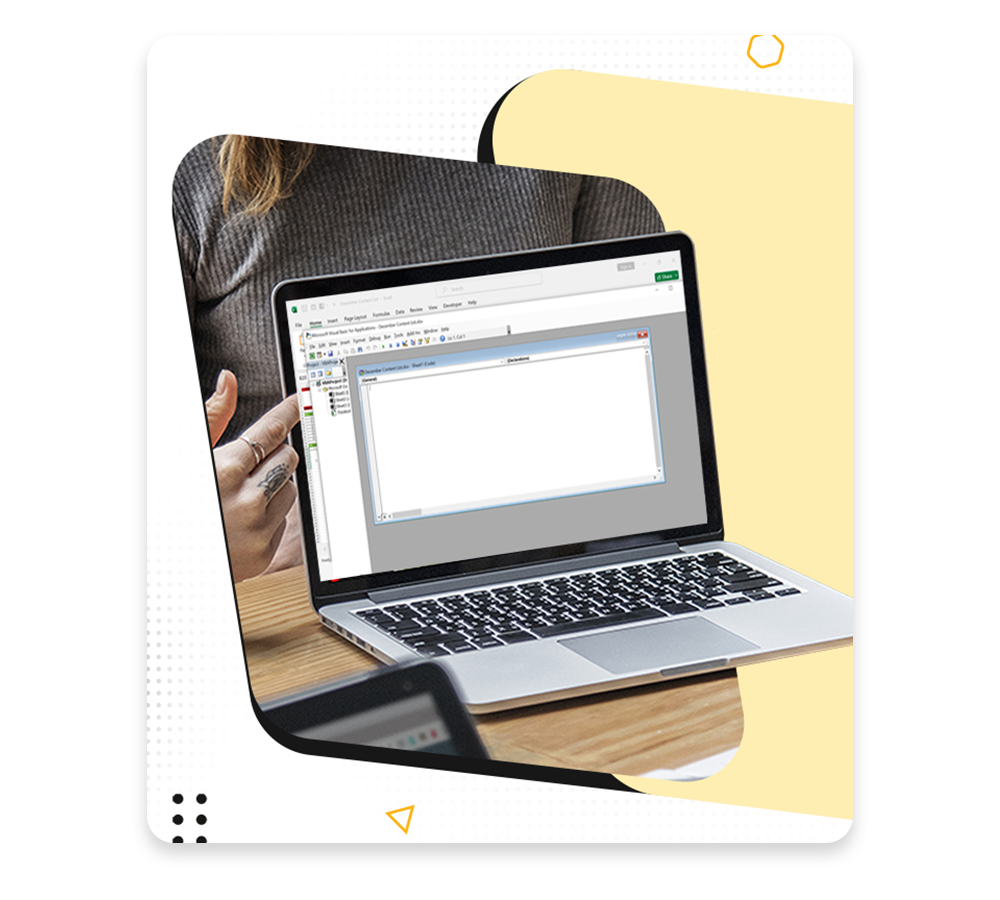
Excel Programming with VBA Course Singapore
VBA (Visual Basic for Applications) is the programming language behind Microsoft Excel and other Office applications. It enables users to automate repetitive tasks, build custom functions, and create powerful tools by writing macros—greatly improving efficiency and productivity.
This 3-day hands-on training course is designed to equip participants with practical VBA skills to automate Excel processes and develop custom solutions.
- Record and edit macros
- Use the Visual Basic Editor
- Create sub and function procedures
- Understand objects, properties, methods and events
- Explore the Excel object hierarchy and use the Object Browser
- Work with variables and understand data types
- Use intrinsic functions
- Work with control-of-flow structures
- Design UserForms and work with controls
- Control PivotTables programmatically
- Use debugging tools
- Add error handling to code
Description of the Course
Participants should have a strong command of Microsoft Excel, including the ability to:
- Create, edit, format, and print worksheets
- Build and apply advanced formulas (e.g. IF, IFS, VLOOKUP, etc.)
- Work with PivotTables and charts
- Sort, filter, and manage large data sets
- A solid working knowledge of Excel is essential, as this course builds on advanced features to introduce programming concepts using VBA.

Grants available
UTAP
Union Training Assistance Programme
UTAP: Update info about UTAP funding on all pages.
Course Outlines
Getting Started
- Introducing Visual Basic for Applications
- Displaying the Developer Tab in the Ribbon
- Recording a Macro
- Saving a Macro-Enabled Workbook
- Running a Macro
- Editing a Macro in the Visual Basic Editor
- Understanding the Development Environment
- Using Visual Basic Help
- Closing the Visual Basic Editor
- Understanding Macro Security
Working With Procedures And Functions
- Understanding Modules
- Creating a Standard Module
- Understanding Procedures
- Creating a Sub Procedure
- Calling Procedures
- Using the Immediate Window to Call Procedures
- Creating a Function Procedure
- Naming Procedures
- Working with the Code Editor
Understanding Objects
- Understanding Objects
- Navigating the Excel Object Hierarchy
- Understanding Collections
- Using the Object Browser
- Working with Properties
- Using the With Statement
- Working with Methods
- Creating an Event Procedure
Using Expressions, Variables, And Intrinsic Functions
- Understanding Expressions and Statements
- Declaring Variables
- Understanding Data Types
- Working with Variable Scope
- Using Intrinsic Functions
- Understanding Constants
- Using Intrinsic Constants
- Using Message Boxes
- Using Input Boxes
- Declaring and Using Object Variables
Controlling Program Execution
- Understanding Control-of-Flow Structures
- Working with Boolean Expressions
- Using the If…End If Decision Structures
- Using the Select Case…End Select Structure
- Using the Do…Loop Structure
- Using the For…To…Next Structure
- Using the For Each…Next Structure
- Guidelines for use of Control-of-Flow Structures
Working With Forms And Controls
- Understanding UserForms
- Using the Toolbox
- Working with UserForm Properties, Events,
and Methods - Understanding Controls
- Setting Control Properties in the Properties Window
- Working with the Label Control
- Working with the Text Box Control
- Working with the Command Button Control
- Working with the Combo Box Control
- Working with the Frame Control
- Working with Option Button Controls
- Working with Control Appearance
- Setting the Tab Order
- Populating a Control
- Adding Code to Controls
- Launching a Form in Code
Working With The PivotTable Object
- Understanding PivotTables
- Creating a PivotTable Using Worksheet Data
- Working with the PivotTable Objects
- Working with the Pivot Fields Collection
- Assigning a Macro to the Quick Access Toolbar
Debugging Code
- Understanding Errors
- Using Debugging Tools
- Setting Breakpoints
- Stepping through Code
- Using Break Mode during Run mode
- Determining the Value of Expressions
Handling Errors
- Understanding Error Handling
- Understanding VBA’s Error Trapping Options
- Trapping Errors with the On Error Statement
- Understanding the Err Object
- Writing an Error-Handling Routine
- Working with Inline Error Handling
Frequently Asked Questions (FAQs)
What is Excel VBA all about?
Excel VBA (Visual Basic for Applications) is Microsoft’s programming language for automating tasks and customizing Excel functionality. It allows users to build macros, create user-defined functions, and control Excel’s user interface, significantly enhancing productivity and workflow efficiency.
Why is it important to learn VBA programming?
Learning VBA helps automate repetitive tasks, streamline data processing, and simplify complex calculations. It’s especially useful for professionals handling large datasets, financial models, or routine reporting—saving time and improving accuracy.
Why should I take an Excel VBA course?
An Excel VBA course equips you with in-demand technical skills, boosts your Excel proficiency, and enhances your ability to automate and manage data. It also opens up more career opportunities, especially in roles that require advanced Excel use.
How do I start learning VBA programming?
The best way to start is by enrolling in a structured Excel VBA course. It provides step-by-step guidance, hands-on practice, and foundational knowledge to help you build confidence. Look for a course with a clear curriculum, experienced instructors, and real-world exercises.
Is Excel VBA difficult to learn?
Like any programming language, VBA has a learning curve—but it’s one of the more beginner-friendly options. With consistent practice, the right resources, and proper instruction, most learners find it manageable and rewarding.
Reviews of Our Students
I took an Excel course at Training Singapore, and it was extremely beneficial. The trainer explained everything from basic to advanced features like VLOOKUP, Pivot Tables, and Macros in a simple and easy-to-understand way.
The course fees at Training Singapore were fully covered by SkillsFuture Credit. This is a great opportunity if you are a Singapore resident looking to enhance your skills.
The course material was well-organized, covering key areas such as Excel interface, data entry, formulas, and reporting. It made learning structured and effective.
The trainers were not only highly skilled in their subjects but also provided personalized assistance, making complex concepts easy to understand.
Training Singapore offers both online and offline training options, allowing students to choose according to their convenience and learning preferences.
I took an Excel course at Training Singapore, and it was extremely beneficial. The trainer explained everything from basic to advanced features like VLOOKUP, Pivot Tables, and Macros in a simple and easy-to-understand way.
The course fees at Training Singapore were fully covered by SkillsFuture Credit. This is a great opportunity if you are a Singapore resident looking to enhance your skills.